Radiohead Join 13,500 Creatives in AI Warning Statement
Radiohead AI statement: Over 13,500 creatives including Radiohead, Jamiroquai, and Nitin Sawhney signed a statement against unlicensed AI training use.
Estimated reading time: 3 min
Radiohead and 13,500 Creatives Challenge AI Training
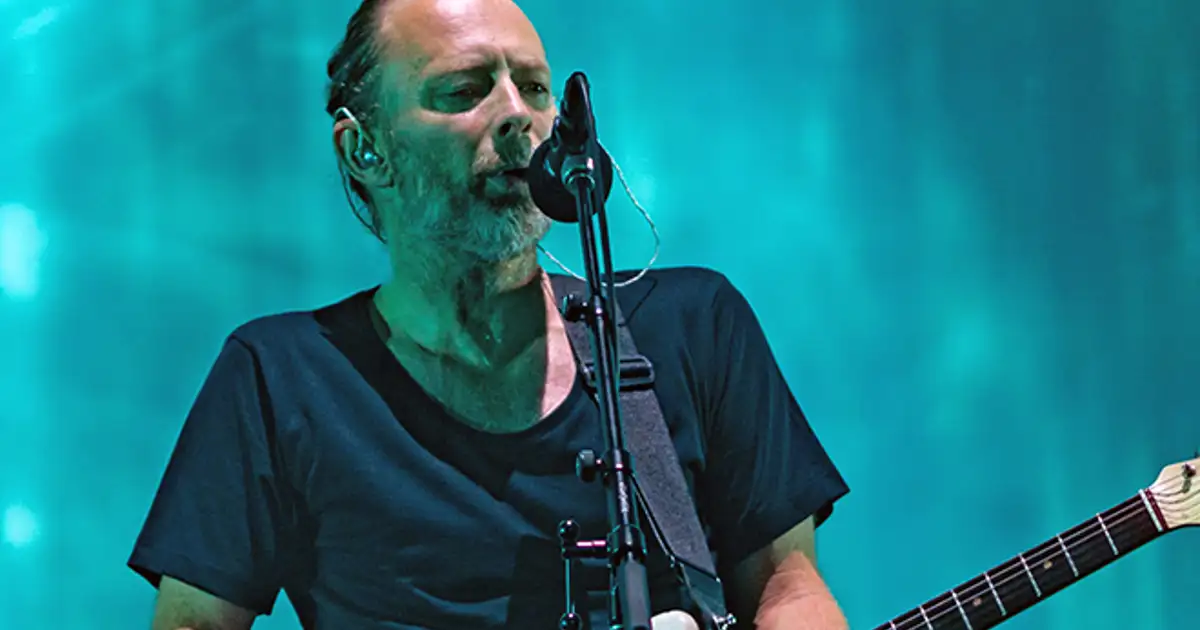
More than 13,500 creatives have signed a statement warning against unlicensed use of their work to train generative AI models. All five Radiohead members—Thom Yorke, Ed O'Brien, Jonny Greenwood, Colin Greenwood and Philip Selway—appear alongside Nitin Sawhney, ABBA's Björn Ulvaeus, Jamiroquai's Jason Kay, Hot Chip's Joe Goddard, The Cure's Robert Smith, AURORA and Max Richter.
Organized by composer and former Stability AI executive Ed Newton-Rex, who now leads the nonprofit Fairly Trained, the statement declares: "The unlicensed use of creative works for training generative AI is a major, unjust threat to the livelihoods of the people behind those works, and must not be permitted." Newton-Rex pushes back on industry framing, noting that AI firms pay heavily for engineers and compute but expect cultural data free. (Original source)
APRA AMCOS data projects 23% of artists' revenues at risk by 2028 from generative AI—anchoring concerns in material livelihood loss rather than abstract aesthetics.
How Artists Are Pushing for Licensed Data
Beyond headline names, the statement draws institutional muscle from SAG-AFTRA, the American Federation of Musicians, Universal Music Group and the International Publishers Association, lending union and industry weight to what began as a grassroots petition. Newton-Rex reframes the debate by refusing the neutral language of "training data," insisting AI firms are simply processing "people's work—their writing, their art, their music"—and choosing to pay engineers and compute but treat creative catalogs as free. His nonprofit Fairly Trained now certifies AI companies using licensed or consent-based datasets, aiming to establish an alternative standard. The timing is strategic: the U.S. Copyright Office is preparing Part 3 of its AI report, focused explicitly on training liability and licensing frameworks, while parallel lawsuits target OpenAI, Suno and Udio over unlicensed scraping. (Copyright Office Releases Part 2 of Artificial Intelligence Report)
What Happens If Regulation Forces Consent Models
If policymakers and courts enshrine consent-based training, the entire economics of generative audio shift. The three-part U.S. Copyright Office report—Part 3 specifically addresses training liability and licensing frameworks—could set precedents that ripple globally, forcing platforms to negotiate blanket or per-work licenses rather than invoke fair-use defenses that have dominated recent litigation. (Kevin Bacon, Julianne Moore, Thom Yorke, and 10K+ creators sign ...) Organizations already positioning for that pivot include SAG-AFTRA, the American Federation of Musicians and industry heavyweights like Universal; their institutional backing signals anticipation of statutory or contractual licensing regimes modeled on radio or streaming PRO structures. For producers and composers, a consent model means catalog access becomes gatekept and monetized.
Sources
- Original source
- Copyright Office Releases Part 2 of Artificial Intelligence Report (2025-01-29)
- Kevin Bacon, Julianne Moore, Thom Yorke, and 10K+ creators sign ... (2024-10-22)
- Radiohead, Jamiroquai, Nitin Sawhney join over 10,000 creatives in ...
- The AI Economy: Celebrities Sound the Alarm on AI Dangers (2024-10-25)
- AI thrives on unpaid creative labor - The Japan Times (2025-12-18)
How we reported this
We reviewed the original coverage from MixmagTech and cross-checked key details against the sources above. If something is unclear or changes after publication, we’ll update this post.
About the author
Tom Rander — is a journalist and electronic music specialist who has spent years documenting the intersection of club culture and technical innovation. With a background rooted in both the booth and the press room, Tom founded Rander.io to provide a more rigorous, expertise-driven alternative to mainstream music blogs.